
Former central bank deputy governor S S Tarapore today said the Reserve Bank of India's monetary measures to contain inflation have been "appropriate" as of today

The MPC headed by RBI Governor Urjit Patel said that the recent excise duty cut by the government on petrol and diesel will help contain inflation.

Reserve Bank of India cut interest rates for a third time this year.
Reserve Bank of India has kept options open for a possible repo rate cut but said there was no "great urgency" for slashing it from the present level of 5.0 per cent.

The Reserve Bank of India (RBI) is likely to take a "more dovish" stance in its upcoming monetary policy review on December 2 and may go in for a cut repo rate in February, according to a British brokerage house report.

Passenger vehicle sales in India are estimated to have surged by nearly 25 per cent in June 2024, reaching approximately 4 lakh units, with Maruti Suzuki, Tata Motors PV, and Mahindra & Mahindra leading the growth, despite concerns over geopolitical tensions and monsoon impact.
Reserve Bank on Tuesday kept the bank rate and CRR unchanged, but hiked repo and reverse repo rate by 0.25 per cent to 5.5 per cent and 6.5 per cent respectively as part of measures to rein in inflation.

S&P Global Ratings projects India's economic growth to slow to 6.6 per cent in FY27, down from 7.7 per cent in FY26, citing energy stress and a potential sub-par monsoon.

The Reserve Bank of India on Friday decided to keep the policy rate unchanged at 6.5 per cent for the fifth time in a row as it maintains a tight vigil on inflation. The rate increase cycle was paused in April after six consecutive rate hikes, aggregating to 250 basis points since May 2022. Announcing the bi-monthly monetary policy, RBI Governor Shaktikanta Das said the Monetary Policy Committee (MPC) unanimously decided to keep the repo rate unchanged at 6.5 per cent.
The Reserve Bank has kept the key policy rates unchanged, while the Cash reserve Ratio (CRR) has been cut by 25 bps to 4.25%.
Reserve Bank of India Governor Bimal Jalan said on Friday that there was no proposal to lower the short-term benchmark repo rate now.


The muted CPI inflation print at 5% earlier this week, followed by a similar WPI number released Wednesday, seems to have spurred India's central bank into action, is how the economists are reading into Reserve Bank of India governor Raghuram Rajan's 25 basis point cut in repo rate.

The Monetary policy committe comprising 6 members voted 6-0 in the favour of the rate cut.

The Reserve Bank of India (RBI) on Wednesday kept its policy interest rate unchanged at 5.5 per cent for the second consecutive time, citing concerns over tariff uncertainties.

Monetary policy committee had recommended no change in the key rate.

The consumer price index (CPI)-based inflation hitting an all-time low in October would encourage the six-member monetary policy committee (MPC) of the Reserve Bank of India (RBI) to cut the policy repo rate in its upcoming December 3-5 meeting. However, the July-September GDP growth, expected to be above 7 per cent, may act as a deterrent.

Indian stock market indices closed on a mixed note, with the Sensex gaining 374 points driven by buying in Reliance Industries and ICICI Bank, while the Nifty remained flat. This divergence is attributed to a new Closing Auction Session (CAS) mechanism introduced by stock exchanges, impacting market liquidity and price discovery.

The move will to a large extent speed up the monetary transmission process--which is banks passing on the rate cuts that the Reserve Bank announces to their borrowers without much delays--something that has been missing all these while and something that the RBI has been unhappy with.
Reserve Bank of India chief Bimal Jalan reiterated on Monday the bank's soft monetary bias but said there was no immediate plan to cut the short-term repo rate.

Expressing disappointment over the hike in repo rate by the RBI, India Inc on Friday said a rate cut by the bank would have helped ameliorate sentiments as businesses are "reeling" under a tight liquidity crunch due to high cost of capital.

Most members of the Reserve Bank of India's Monetary Policy Committee (MPC) expressed concerns about inflation becoming generalised and highlighted uncertainties surrounding both inflation and growth prospects due to the West Asia conflict, according to the recently released minutes.

After raising interest rate by a cumulative 250 basis points in 11 months, the Reserve Bank of India (RBI) on Thursday unexpectedly kept benchmark rate unchanged as global banking woes added uncertainty to the economic outlook. Five out of six members of MPC voted to remain focused on the withdrawal of accommodation to ensure inflation aligns with target while focusing on growth, RBI Governor Shaktikanta Das said on Thursday. The Monetary Policy Committee of the central bank decided to take a pause after a rate hike seen in previous six consecutive policies.
The new rate will be effective from December 8. The primary liquidity made available to the system through these measures is worth over Rs 3,00,000 crore (Rs 3,000 billion), RBI Governor D Subbarao said in Mumbai.
The primary focus of monetary policy remains the containment of inflation and anchoring of inflation expectations.

Shrugging off concerns over the depreciation of rupee, the RBI has cut interest rate by 25 basis points to 5.25 per cent in a bid to further bolster economic growth, which rose to a six-quarter high of 8.2 per cent in the second quarter of the current financial year.
The Reserve Bank of India has no plans to cut the short-term repo rate for some time, a senior central bank official said on Thursday.

With retail inflation surprising on the upside, the six-member monetary policy committee (MPC) of the Reserve Bank of India (RBI) is expected to increase the repo rate by 35-50 basis points (bps) in the review scheduled for September 28-30. According to economists, the central bank will continue to focus on bringing inflation down even though economic growth has remained sluggish. Data released by the government on Monday showed that the consumer price index (CPI)-based inflation increased by 7 per cent year-on-year (YoY) in August, thus, staying above the upper tolerance limit of the central bank for all the eight months of 2022.

"Our endeavour is to bring headline inflation in line with the target over the medium term," said RBI Governor Sanjay Malhotra, addressing concerns about the central bank's policy stance and economic outlook.

The economic growth is likely to moderate to 6.1 per cent, slowest in over seven quarters, from 6.6 per cent last year same period.

Despite the Reserve Bank of India's (RBI) and the government's recent initiatives to attract foreign capital, which are expected to alleviate pressure on long-duration bonds, most debt fund managers are maintaining a cautious stance, favouring shorter-duration papers due to global uncertainties and potential future rate hikes.

India's banking system liquidity has fallen into a deficit for the first time in nearly three months, prompting the Reserve Bank of India (RBI) to inject 1.41 trillion through a seven-day variable rate repo (VRR) auction to ease the temporary tightness.
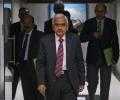
With the 115 bps reduction in repo rate beginning February, banks have already transmitted 72 bps to the customers on fresh loans and some large banks have transmitted as much as 85 basis points.

The repo rate, at which the central bank lends to the system, will come down to 5.75 per cent after the cut.
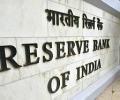
Majority of the experts expect a 25 basis point reduction.
Uncertainties stemming from the West Asia crisis and its potential impact on inflation and economic growth were key factors in the Reserve Bank of India's Monetary Policy Committee (MPC) decision to maintain the status quo on interest rates, according to the recently released MPC meeting minutes.
The Reserve Bank of India (RBI) on Wednesday announced to increase the policy repo rate by 50 basis points to 4.9 per cent, the second hike in five weeks aimed at quelling the inflation. The MPC vote was unanimous and has decided to keep stance withdrawal from accommodative, RBI Governor Shaktikanta Das said in a press conference on Wednesday. The decision was taken during a three-day meeting of the RBI's Monetary Policy Committee (MPC) to review the interest rates in the country. The MPC voted unanimously to increase the policy repo rate by 50 bps to 4.90 per cent," Das said.
The central bank deputy chief said on Monday that the monetary authorities were unlikely to lower the repo rate from the current five per cent for quite some time.\n\n\n\n
Higher for longer' may be the narrative in the developed markets, but interest rates might not stay high for very long in India, with a section of the market expecting rate cuts to begin this year. The six-member Monetary Policy Committee of Reserve Bank of India (RBI) decided to keep interest rates unchanged at 6.5 per cent in the April review - after hiking the policy repo rate in six previous meetings. RBI Governor Shaktikanta Das emphasised that the pause was only for the April policy and that the central bank was ready to act if the situation demanded.
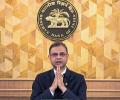
Shrugging off concerns over the depreciation of rupee, the RBI has cut interest rate by 25 basis points to 5.25 per cent in a bid to further bolster economic growth, which rose to a six-quarter high of 8.2 per cent in the second quarter of the current financial year.
